Skip to content

Meet the wild animals that don’t just tolerate the cold but thrive in it, and learn the clever adaptations that keep them warm.
Most of us reach for a coat the second the temperature drops. Some animals do the exact opposite. For them, snow and ice are not a problem to solve. They are home.
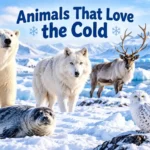
If you have ever wondered which animals love the cold, how they stay warm, and where they live, you are in the right place. This guide covers wild animals that love the cold, from the sea ice of the Arctic to the rocky peaks of the Himalayas. You will find a quick list, a comparison table, the science behind their winter survival, and clear answers to the questions people ask most.

Which Animal Likes the Cold?
Plenty do, but the polar bear is the one most people think of first. It lives on Arctic sea ice, hunts seals in freezing water, and stays active all winter. Close behind are the emperor penguin, the musk ox, the Arctic fox, and the snow leopard.
What makes these animals special is that they do not just put up with the cold. They are built for it. Thick fur, layers of fat, and clever body shapes let them stay comfortable where most creatures would struggle. Think of it this way: a polar bear on a hot day is the one in trouble, not the one in a snowstorm.
Name 10 Animals That Love the Cold
If you need a quick answer, here is a simple cold weather animals list. These ten animals love the cold, and since every one of them lives in snowy places, it also works as a top 10 snow animals list:
- Polar bear
- Arctic fox
- Arctic wolf
- Arctic hare
- Musk ox
- Caribou (reindeer)
- Snow leopard
- Snowy owl
- Emperor penguin
- Walrus
If you only need to name one animal that loves cold weather, any animal on this list is a safe answer. And if a teacher asks you to name some animals that love the cold, polar bear, snowy owl, and musk ox make an easy start.
What “Loving the Cold” Really Means
Not every animal handles winter in the same way. True cold specialists, such as the polar bear, emperor penguin, and musk ox, stay active through the harshest months. Others live in icy places but move to ice-free ground to breed, like the gentoo penguin. Snow geese and tundra swans breed in the Arctic and then fly south before the worst of winter arrives. And a few animals, such as the wood frog, simply freeze and wait for spring.
This guide focuses on the first group. These are the animals that like the cold and live comfortably in it all year.
Arctic vs Antarctic: Where Do These Animals Live?
People often mix up the two ends of the planet, but they are very different places. The Arctic is a frozen ocean surrounded by land in the far north. Antarctica is a frozen continent surrounded by ocean in the far south. That is why polar bears, Arctic foxes, and snowy owls live only in the north, while emperor, gentoo, and Adélie penguins live in the south. A few travelers, such as orcas and Arctic terns, visit both. So when you read about an animal that loves the cold, it helps to check which pole it calls home.
Cold Weather Animals List: At a Glance
| Animal | Scientific name | Where it lives | Key cold adaptation | Conservation status |
|---|---|---|---|---|
| Polar bear | Ursus maritimus | Arctic sea ice (Canada, Alaska, Greenland, Norway, Russia) | Two fur layers, blubber, black skin | Vulnerable |
| Arctic fox | Vulpes lagopus | Arctic tundra | Seasonal white coat, small ears | Least Concern |
| Arctic wolf | Canis lupus arctos | High Arctic Canada and Greenland | Thick double coat, short ears and legs | Least Concern (as gray wolf) |
| Arctic hare | Lepus arcticus | Northern Canada and Greenland | Thick white coat, fat layer, short ears | Least Concern |
| Musk ox | Ovibos moschatus | Arctic Canada and Greenland | Soft undercoat, herd huddling | Least Concern |
| Caribou (reindeer) | Rangifer tarandus | Arctic and subarctic of North America, Europe, Siberia | Dense undercoat, wide hooves, UV vision | Vulnerable |
| Snow leopard | Panthera uncia | Mountains of Central Asia, Himalayas, Mongolia | Thick coat, furry paws, long tail | Vulnerable |
| Snowy owl | Bubo scandiacus | Arctic tundra | Feathered feet, dense down | Vulnerable |
| Emperor penguin | Aptenodytes forsteri | Antarctica | Huddling, fat reserves, dense feathers | Near Threatened |
| Gentoo penguin | Pygoscelis papua | Antarctic Peninsula, South Georgia, Falkland Islands | Insulating feathers and fat | Least Concern |
| Atlantic puffin | Fratercula arctica | North Atlantic | Waterproof plumage, fat | Vulnerable |
| Walrus | Odobenus rosmarus | Arctic coasts and seas | Thick blubber, tusks for ice | Vulnerable |
| Harp seal | Pagophilus groenlandicus | North Atlantic and Arctic Ocean | Blubber, snow shelters | Least Concern |
Conservation statuses follow IUCN Red List categories and can change, so check the Red List for the latest assessment.
Animals Living in Cold Regions Have Amazing Adaptations
Animals living in cold regions have a few tricks in common. Once you know them, it is easy to see why each species survives where it does.
- Insulation: Double coats, dense feathers, and thick blubber trap body heat.
- Body shape: Short ears, short legs, and a compact build lose less heat.
- Camouflage: Many species turn white in winter to hide in the snow.
- Teamwork: Huddling, as musk oxen and emperor penguins do, saves energy.
- Shelter: Snow caves, burrows, and winter sleep protect against storms.
- Migration: Some animals breed in the far north, then leave for milder weather.
None of these tricks work alone. A musk ox with a thick coat still huddles when a blizzard hits, and an Arctic fox in a white coat still curls its tail over its nose to sleep. Survival in the cold is usually a mix of body, behavior, and habitat.
Shorter days are often the signal that winter is coming. As daylight fades, Arctic foxes and hares begin growing white coats, ptarmigans molt, and migratory birds start to move.

Animals That Change Color in Winter
Seasonal camouflage is one of the cleverest cold weather tricks. Arctic foxes, Arctic hares, and willow ptarmigans turn white as the snow arrives. The snowshoe hare does the same, and its huge hind feet work like built-in snowshoes. The ermine, also called the stoat, swaps a brown summer coat for white fur but keeps a black tip on its tail. When spring comes, they all change back, so their coats match the ground all year.
Wild Animals That Love the Cold on the Arctic Tundra
The tundra stretches across northern Canada, Alaska, Greenland, Norway, and Russia. It is home to some of the best-known animals that love the cold.
Polar bear. Two layers of fur, a thick layer of blubber, and even furry paw soles help the polar bear grip the ice and stay warm. It hunts seals from the sea ice, and pregnant females dig snow caves to give birth, usually to two cubs.
Arctic fox. This fox sheds its coat twice a year. It wears white in winter and a reddish-brown coat in spring. Its small ears and short snout also help it hold on to heat. When a polar bear or Arctic wolf is near, it often freezes in place and goes unnoticed.
Arctic wolf.
Also called the polar wolf or white wolf, it lives in northern Canada and Greenland. Its thick winter coat protects it from freezing winds, while pack hunting helps it find food when prey is scarce.
Arctic hare. Short ears, a layer of fat, and a thick white coat suit the hare to the far north. In extreme cold it digs a hole to hide in, and its coat turns gray-brown in summer.
Musk ox. Musk oxen live in northern Canada and Greenland and eat roots and mosses. A long outer coat covers a soft undercoat, and that inner layer is so warm that people prize it for knitting. Sharp hooves dig through snow and ice for food. When a storm or predator comes, the herd huddles with the calves in the middle.
Caribou (reindeer).
Caribou and reindeer are the same animal. They live in Arctic and mountain regions across North America, Europe, and Siberia. Their thick coats trap heat, while wide hooves help them walk on ice and dig through snow. They can also see ultraviolet light, helping them spot objects on snow.
Cold Forest Animals: Moose, Wolverines, and Bears
South of the tundra, cold forests called taiga stretch across Canada, Alaska, Scandinavia, and Russia. Many animals that like the cold live here too.
Moose. The largest member of the deer family, the moose has long legs that help it wade through deep snow and a thick coat that keeps out the chill.
Wolverine. This tough, bear-like relative of the weasel lives in northern forests and tundra. Its dense fur resists frost, and it stays active through the winter.
Grizzly and brown bears. Brown bears, including grizzlies, spend the coldest months sleeping in dens, then wake in spring. Even so, they handle snowy country with ease.
Grey wolf. The grey wolf ranges across much of the northern world and is a close relative of the Arctic wolf. A thick double coat and life in a pack help it survive freezing winters.
Siberian tiger. The world’s largest cat lives in the snowy forests of Russia’s Far East. A thick coat and a layer of fat protect it in winter.

Animals That Live in the Snow Mountains
Animals that love cold places are not found only near the poles. High mountains are cold too.
Snow leopard. Native to Mongolia and the Himalayan Mountains, the snow leopard prowls steep, rocky cliffs and hunts ibex, bharal, and hares. A thick coat, broad furry paws, and a long tail it wraps around its body keep it warm. It is also a strong jumper, leaping up to six times its own body length. In the coldest months it often drops just below the timberline to hunt.
The Himalayan tahr, a wild goat with a shaggy coat, also lives on cold mountain slopes. These cats, goats, and sheep show that you do not need a polar climate to live with snow all year.
Farther east, the yak lives on the high, cold Tibetan Plateau, where long, shaggy hair keeps out the wind. In Japan, snow monkeys, also called Japanese macaques, live in snowy mountain forests and are famous for warming up in natural hot springs.
Animals That Love the Cold and Ice: Birds and Sea Life
Snowy owl. The snowy owl hunts over open tundra and is the heaviest owl in North America, partly because of its dense down feathers. Some stay in northern Canada all year, while others winter as far south as New York. It eats lemmings, rabbits, fish, and even other birds.
Emperor penguin. Few birds breed in the Antarctic winter, but the emperor penguin does. It faces winds near 90 mph and temperatures around -40°F by huddling in tight groups and taking turns on the warm inside.
Adélie penguin. Smaller than the emperor, the Adélie penguin lives along the Antarctic coast. It nests on rocky, ice-free ground in summer and spends the rest of the year near the pack ice.
Atlantic puffin. Puffins spend most of winter at sea, diving for fish in the cold North Atlantic. In spring they return to cliffside burrows from Newfoundland and Maine to Norway.
Willow ptarmigan. This grouse turns white in autumn to stay hidden. It lives in northern forests and tundra from Canada to Norway and Mongolia, and feeds on willow buds and twigs.
Snow goose and tundra swan. Snow geese and tundra swans breed in the Arctic but fly south for winter, so they are visitors rather than year-round cold lovers.
Walrus. Walruses live along Arctic coasts, where thick blubber protects them in icy water. They use their tusks to haul onto the ice and make breathing holes, and they eat mostly mollusks.
Harp seal. Harp seals, also called saddleback seals, live in the northern Atlantic and Arctic oceans. When it gets too cold, they shelter in snow caves.
Orca. Also called the killer whale, the orca hunts in both Arctic and Antarctic waters but also lives in warmer seas, so it is more of a cold-water visitor than a cold specialist.
Blue whale. The largest animal on Earth feeds in cold, food-rich waters in summer, then moves to warmer seas to breed

The Science Behind Staying Warm
Thick fur is only part of the story.
- Black skin on a white bear. The polar bear’s skin is black, which helps it soak up warmth.
- Heat recycling. In penguin legs and flippers, warm blood passes cold blood heading back to the body, so heat is not lost.
- Small extremities. The Arctic fox’s short ears lose less heat than the huge ears of a desert fox.
- Blubber. Walruses and seals use fat for both insulation and stored energy.
Hibernation, Torpor, and Brumation: What Is the Difference?
These three words are often mixed up, but each describes a different way of getting through the cold.
- Hibernation: A long, deep sleep in which a mammal’s heart rate and body temperature drop. The Arctic ground squirrel is a champion, letting its body temperature fall below freezing. Bears sleep more lightly, which is why some people call their rest a winter sleep.
- Torpor: A shorter dip in body temperature and energy use that can last hours or days. Some small birds and mammals use it on very cold nights.
- Brumation: The reptile and amphibian version, in which cold blooded animals slow down and hide until it warms up.
Cold Blooded Animals and the Cold
Cold blooded animals are different. They cannot make their own body heat, so they depend on the sun and the air around them. That is why cold blooded animals are slowed down by low temperature. Their muscles, digestion, and reactions all get sluggish when it freezes.
If someone asks for five animals that are cold blooded, try frogs, snakes, lizards, turtles, and fish. If a reading passage asks which cold blooded animals are mentioned, look for these groups first. Many reptiles cope with winter by hiding underground and slowing down for months, a state called brumation, which works like hibernation.
A few cold blooded animals have clever workarounds, though.
Wood frog. Found across North America, including Alaska, the wood frog survives winter with much of its body frozen. Natural sugars protect its cells, and it thaws in spring.
Red flat bark beetle. This beetle makes antifreeze compounds like glycerol that keep its body fluids from freezing.
Antarctic icefish. Antifreeze proteins in its blood stop ice crystals from growing in the near-freezing waters around Antarctica.

Fun Facts About Cold Weather Animals
- Emperor penguins are the largest penguins on Earth.
- Snowy owls often hunt in daylight, which is unusual for owls.
- Despite the name, musk oxen are more closely related to goats and sheep than to cattle.
- A walrus spends most of its time in or near icy water.
- A frozen wood frog has no heartbeat until it thaws.
Do Pets and Livestock Like the Cold?
Some animals that like the cold live right in our backyards. Dual-coated dogs such as the Akita, Siberian Husky, Great Pyrenees, and German Shepherd have a soft undercoat that traps warm air and a tough outer coat that sheds water. A little snow resting on their backs is usually a good sign, because it means the coat is insulating well. Among cats, the Norwegian Forest Cat and Maine Coon cope well with winter, but most house cats do not.
Horses, sheep, and cows grow thicker winter coats, and digesting hay produces heat. Still, every animal needs shelter from wind chill, unfrozen water, and enough food. A wet coat loses its warmth, and frostbite can hit ears, tails, and toes, so see a vet if you suspect it.
FAQs
Animals with thick fur, dense feathers, or a layer of fat, like polar bears, musk oxen, and emperor penguins.
The polar bear. Penguins and Arctic foxes also stand for winter.
Most reptiles and amphibians, tropical animals like sloths and monkeys, and most house cats.
Several are, including polar bears, snow leopards, and walruses, mostly due to habitat loss and a warming climate.
No. Polar bears live in the Arctic, while penguins live mostly in the south.
Fur or feathers, fat, a compact body, and huddling or digging into snow.
White fur blends into snow, while black skin underneath absorbs warmth.
Yes. Caribou is the North American name, reindeer the European and Asian one.
No. Galápagos and African penguins live in warm climates.
No. Many stay active or migrate, so hibernation is only one strategy.
The Weddell seal, in the waters around Antarctica.
Many struggle, since thick coats can cause overheating, so zoos use cool pools and shade.
Why Their Future Matters
Many animals that love the cold depend on sea ice and snow, and a warming climate is changing both. The emperor penguin is Near Threatened because its breeding ice is shrinking. There is good news too. Walrus numbers are slowly recovering after heavy hunting for their tusks, and musk oxen have been brought back to parts of Alaska, Canada, and northern Europe through rewilding. Protecting sea ice, quiet tundra, and cold mountain habitat helps all of these species at once, from the smallest hare to the largest bear.
Where to See Them
Winter is a great time to visit a zoo, since cold weather animals are often more active in cool air. The Akron Zoo and the Pittsburgh Zoo & PPG Aquarium both feature winter-loving animals, so check their current lineups. In the wild, try Churchill in Manitoba for polar bears or Svalbard in Norway for Arctic wildlife. Wherever you go, keep a respectful distance and never feed wild animals.
Final Thoughts
From the polar bear’s blubber to the snowy owl’s feathered feet and the emperor penguin’s winter huddle, animals that love the cold show how many ways life can adapt to ice and snow. Next time winter bites, remember that somewhere out there, these animals are right at home.

I am experts in Animal Behavior, Wildlife, Habitats and Species Facts. Clear, research-based and easy-to-understand animal content here.