Skip to content

Cuba is the largest island in the Caribbean. It is also one of the richest places for wildlife in the region. Forests, swamps, mountains, caves and coral reefs all sit within a short drive of each other. Each one is home to different animals.
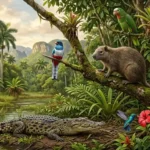
So which animals live in Cuba? The list includes the smallest bird in the world, a venomous mammal, a crocodile that leaps out of the water and snails with painted shells. Many of these species live nowhere else on Earth.
This guide covers the main animals of Cuba, group by group. You will learn which species are endemic, which ones are dangerous, where to see wildlife and how people are protecting it.
Quick Facts About Cuban Wildlife
| Topic | Quick Fact |
|---|---|
| Island size | About 105,000 square kilometers for the main island |
| National bird | Cuban trogon, known as the tocororo |
| Smallest bird | Bee hummingbird |
| Rarest mammal | Cuban solenodon |
| Famous reptile | Cuban crocodile |
| Best wetland for wildlife | Zapata Swamp |
| Dangerous land snakes | None |
| Best season for birds | November to April |
Why So Many Unique Animals Live in Cuba
Cuba sits in the northern Caribbean, where the Caribbean Sea, the Gulf of Mexico and the Atlantic Ocean meet. Florida and the Bahamas lie to the north, the Yucatán Peninsula to the west, Hispaniola to the east, and Jamaica and the Cayman Islands to the south. Cuba has been an island for millions of years. Animals that reached it long ago evolved on their own. Over time, many of them became new species.
Scientists call this endemism. An endemic animal lives in one place and nowhere else. Cuba has a very high number of them. They include birds, frogs, lizards, snails and insects.
Island life also shaped which animals made it here. Large land predators never arrived. Monkeys, big cats and bears are not native to Cuba. Small mammals, birds and reptiles filled most roles in nature. Some grew large. Others became tiny.
Cuba also has a mix of climates. Heavy rain falls on the eastern mountains. The southwest is dry and covered in scrub. Huge swamps spread across parts of the south. Each habitat supports its own set of animals.
People changed the story as well. Humans reached Cuba thousands of years ago. Giant ground sloths and several other native mammals vanished soon after. Later, settlers brought new animals. Some of them now harm native wildlife. We cover those invasive species below.
Animals Endemic to Cuba
Many of the animals that live only in Cuba are covered in detail below. Here is a quick guide to the best-known ones:
- Birds: bee hummingbird, Cuban trogon, Zapata wren, Zapata rail, Zapata sparrow, Fernandina’s flicker and Gundlach’s hawk
- Mammals: Cuban solenodon and several hutia species
- Reptiles: Cuban crocodile, Cuban rock iguana, Cuban knight anole and Cuban boa
- Amphibians: Monte Iberia dwarf frog
- Fish: Cuban gar
- Snails: Cuban painted snail
Main Habitats and the Wild Animals That Live There
To understand wildlife in Cuba, it helps to know the habitats. Each one has its own stars.
Ecologists divide Cuba into six main land ecoregions: moist forests, dry forests, pine forests, wetlands, cactus scrub and Greater Antilles mangroves. The habitats below cover most of them, along with caves and reefs.
Wetlands and Swamps
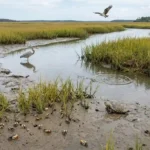
Zapata Swamp is the largest wetland in the Caribbean. It lies on the south coast, near the Bay of Pigs, and is a protected biosphere reserve. Cuban crocodiles, manatees, flamingos and many rare birds live here. The Zapata wren, Zapata rail and Zapata sparrow all depend on its marshes. You will not find them anywhere else.
Rainforests and Mountains
The mountains of eastern Cuba hold the wettest forests on the island. Alejandro de Humboldt National Park is a UNESCO World Heritage Site. It shelters the Cuban solenodon, colorful land snails and many tiny frogs. Cooler air and constant mist keep the forest damp. That suits amphibians well.
Dry Forest and Coastal Scrub
The far west of Cuba is much drier. The Guanahacabibes Peninsula is a biosphere reserve with dry forest, mangroves and quiet beaches. Iguanas, lizards and migrating birds use the forest. Sea turtles nest on the beaches.
Caves
Cuba has thousands of caves. Many bats roost in them. Some caves also hold blind fish and unusual insects that never see daylight.
Mangroves, Beaches and Reefs
Mangroves protect the coast. Young fish grow up in their roots. Crocodiles, herons and spoonbills feed there. Offshore, coral reefs support fish, turtles, rays and sharks. Cuba’s reefs are among the healthiest in the Caribbean.
Plants in Cuba That Shape Animal Life
Plants in Cuba form the base of the food chain. The royal palm is the national tree. Mahogany, ceiba and pine trees shelter birds and insects. Orchids and flowering shrubs feed hummingbirds and bees. Many Cuban plants are endemic too, and they support endemic animals that rely on them.
Mammals in Cuba
Cuba has few native land mammals. The ones that remain are unusual. Most are small, shy and active at night.

Cuban Solenodon
The Cuban solenodon is one of the strangest mammals in the world. It is bigger than most rats. It has a long, flexible snout and sharp claws and digs for insects and worms at night. In Cuba it is known as the almiquí.
This animal is also venomous. Its saliva flows along grooves in its teeth. It uses this venom to subdue prey. Few mammals in the world can do that. Scientists often call it a living fossil because its family is so ancient.
The solenodon is endangered. Scientists once feared it was extinct. It was seen again in the 1970s. Today it survives in a few forests in eastern Cuba. Dogs, cats, mongooses and habitat loss all threaten it.
Cuban Hutia
The Cuban hutia, or jutía, is a large rodent. It looks like a cross between a rat and a small beaver. It climbs trees and eats leaves, bark and fruit and lives in forests, mangroves and rocky areas.
Cuba has several hutia species. Some are common. Others are rare. A few live only on small cays or in tiny patches of forest. Hunting and habitat loss have pushed some of them close to extinction. The conga hutia (Capromys pilorides), also called Desmarest’s hutia, is often listed among animals only found in Cuba. It is one of the larger species.
The conga hutia is also part of everyday life in Cuba. It can weigh around 6 kilograms. Some people keep it as a pet, and it has long been hunted for food. It also fed rebel fighters in the Sierra Maestra mountains during Cuba’s revolution. Hunting still adds to the pressure on wild populations.
Bats
Bats make up a large share of Cuba’s native mammals. The island is home to more than 25 species. Some eat insects. Others eat fruit or drink nectar from flowers.
Bats matter for the whole ecosystem. They pollinate plants. They spread seeds. Large colonies roost in caves across the island.
One of the most interesting is the Cuban flower bat, also called Poey’s flower bat. It weighs only about 15 to 30 grams. A long snout and tongue let it reach nectar deep inside tubular flowers. It also eats pollen and insects. While it feeds, it pollinates native plants. It roosts in caves, tree hollows and sometimes old buildings.
Antillean Manatee
The Antillean manatee is a gentle, slow marine mammal. It grazes on seagrass in shallow coastal waters. It also enters rivers and lagoons. Zapata Swamp is one of the best places in Cuba to look for it.
Manatees are vulnerable. Boat strikes, nets and habitat damage cause most deaths. Their numbers are low across the Caribbean.
Dolphins and Whales
Bottlenose dolphins and spinner dolphins swim along Cuba’s coasts. Deeper offshore waters hold sperm whales and other whales. You are most likely to see dolphins from a boat near the northern and southern reefs.
Birds: The Biggest Draw for Wildlife Fans
Birds are the main reason many travelers visit Cuba for wildlife. More than 370 species have been recorded. About 25 of them are endemic. Many more visit from North America between autumn and spring.

Cuban Trogon (Tocororo)
The Cuban trogon is the national bird. Its feathers are blue, white and red. These match the colors of the Cuban flag. That link made it a symbol of the nation. The trogon belongs to the same bird family as the quetzals.
The trogon lives in forests across the island. It nests in tree holes. It is a good bird to look for in the early morning, when its call carries through the trees. People often mention the tocororo when they ask about the Cuba animal symbol.
Many Cubans also see the tocororo as a symbol of freedom. A popular belief says it cannot live in captivity, and that idea is a big part of why people feel so close to it.
Bee Hummingbird
The bee hummingbird is the smallest bird in the world. It is only about six centimeters long. It weighs about as much as a dime. Males have a bright pink-red head and throat. Their backs flash blue and green.
This tiny bird lives only in Cuba. It feeds on nectar and small insects. Zapata Swamp and forests in the east are good places to find it.
Its small size demands a huge amount of energy. The wings beat more than 80 times per second in normal flight. The bird must visit hundreds of flowers every day to keep going. Cubans call it the zunzuncito, and it is also known as the Helena hummingbird.
Cuban Tody
The Cuban tody is a small, round bird. It has a green back, a bright red throat and a pale belly. It digs a nesting tunnel in an earth bank.
Zapata Wren, Zapata Rail and Zapata Sparrow
These three birds live only in Zapata Swamp. The Zapata wren and Zapata sparrow are rare and in danger. The Zapata rail is one of the rarest birds in the Americas. It is hard to find even for experts. Their survival depends on keeping the swamp healthy.
Cuban Parrots
Cuba has two parrots that draw attention. The Cuban amazon, also called the rose-throated parrot, has a white forehead and red face. The Cuban parakeet is mostly green with a few red feathers. Both live in forests and palm groves. Both suffer from habitat loss and the pet trade.
Fernandina’s Flicker and Gundlach’s Hawk
Fernandina’s flicker is an endangered woodpecker. It lives only in Cuba, mainly in palm savannas and open woods. Gundlach’s hawk is an endangered forest hawk that also lives only here. Both need large areas of healthy habitat.
Owls and Other Endemic Birds
The Cuban pygmy owl and the Cuban screech owl are two small owls found only in Cuba. Other endemic birds include the Cuban green woodpecker, the Cuban blackbird and the Cuban oriole.
The Cuban screech owl is also known as the bare-legged owl. Despite its name, its call is a soft trill rather than a screech. It lives in forests and woodlands, and even in gardens near towns. Some birds are reddish-brown and others are gray.
Flamingos and Waterbirds
American flamingos gather in salty lagoons on the northern coast. Cayo Coco and Camagüey are well known for them. Herons, egrets, spoonbills and ibises feed in wetlands and mangroves across the island.
Birds of Prey and Migrants
Ospreys, vultures and crested caracaras hunt over fields and coasts. Each autumn, dozens of warbler species arrive from North America. They rest and feed in Cuba’s forests before moving on or settling for winter. This is why November to April is the best time for birdwatching.
Reptiles in Cuba
Cuba has more than 150 reptile species. Many live only on the island. Most are harmless to people.

Cuban Crocodile
The Cuban crocodile is one of the most famous animals in Cuba.It has a short, strong snout with bright yellow and black markings. Growing up to 3.5 meters long, this animal can run on land and leap out of the water to catch prey.
This crocodile is critically endangered. Wild populations live mainly in Zapata Swamp and in the Lanier Swamp on Isla de la Juventud. One big threat is mating with the American crocodile. The two species can produce hybrids, which weakens the pure Cuban crocodile. Hunting and habitat loss also play a role.
The long shape of the island is often compared to a crocodile. That adds to the animal’s cultural fame.
American Crocodile
The American crocodile also lives in Cuba. It has a longer, narrower snout. It is bigger than the Cuban crocodile on average. You may see it in marine parks such as Jardines de la Reina.
Cuban Boa
The Cuban boa is the largest snake in Cuba. It can grow to about four meters. Locals call it the majá de Santa María. It hunts bats, birds and rodents. It is not venomous.
Cuban boas give birth to live young. They often hunt bats by hanging near cave entrances and snatching them in flight. Heat-sensing pits along the lips help them find warm-blooded prey in the dark. In some rural areas, people hunt the boa for meat and for fat used in home remedies.
Cuban Racer
The Cuban racer is the snake you are most likely to meet. Fast, shy, and harmless to people, this animal feeds on lizards, frogs, and small rodents. It often lives near farms and gardens, helping control pests.
Cuban Rock Iguana
The Cuban rock iguana, also called the Cuban ground iguana, is a large, heavy lizard. It lives in dry coastal areas and rocky ground. It eats leaves, flowers and fruit. Males grow big and look like small dragons. This species is vulnerable. Habitat loss and invasive predators harm it.
Anoles and Other Lizards
Cuba has dozens of anole species, a classic case of adaptive radiation, where one ancestor splits into many forms to suit different habitats. These small lizards climb trees, walls and fences. The Cuban knight anole is the largest anole in the world. It can grow longer than 40 centimeters, tail included. Males flash a pink throat fan, called a dewlap, to defend their territory. Tiny geckos and skinks also live in leaf litter and under bark.
The Cuban false chameleon is a stranger relative. It is an anole that moves slowly and shifts color from brown to green. Unlike a true chameleon, it has no projectile tongue, so it stalks its prey instead. It lives mainly in eastern forests.
Sea Turtles
Four sea turtle species use Cuban waters: green, hawksbill, loggerhead and leatherback. Females come ashore to lay eggs on quiet beaches. The Guanahacabibes Peninsula and parts of Jardines de la Reina are important nesting areas.
Amphibians in Cuba
Cuba has more than 60 amphibian species. Almost all are frogs. Most live only on the island.
Some of these frogs are tiny. The Monte Iberia dwarf frog is about the size of a fingernail. It is among the smallest frogs in the world. It lives in the wet mountains of eastern Cuba.
The Cuban tree frog is at the other end of the scale. It is one of the largest tree frogs in the Americas. It can grow up to about 14 centimeters. You will often hear it near lights and ponds after rain. It has also spread beyond Cuba and is now an invasive species in some other places.
Amphibians are sensitive to pollution and drought. That makes them a useful warning sign. When frogs vanish from a forest, something is usually wrong.
Fish and Marine Life
Cuba’s waters are as rich as its land. Warm seas, mangroves and coral reefs support thousands of marine species.
Coral Reefs and Reef Fish
Snorkelers and divers see parrotfish, angelfish, groupers, snappers and rays. Jardines de la Reina is one of the largest marine protected areas in the Caribbean. Fishing is tightly limited there. As a result, large groupers and several shark species still thrive.
Two reef residents are worth looking for. The goliath grouper is a huge, vulnerable fish that does well in protected waters. The Cuban hogfish, also called the spotfin hogfish, is a colorful reef fish with a long snout that it uses to dig through sand for shellfish and sea urchins. All hogfish start life as females, and some later become males.
Sharks
Caribbean reef sharks and silky sharks live in Cuban waters. Divers see them on guided trips. They rarely threaten people, and bites are very uncommon.
Cuban Gar
The Cuban gar, or manjuarí, is a freshwater fish. With a long, tooth-filled snout and a prehistoric appearance, this animal lives in rivers, lagoons, and swamps. Its body has changed little over millions of years, earning it the name “living fossil.” As an ambush hunter, it stays still before striking passing fish. Its numbers have dropped due to habitat loss.
Lobsters, Conch and Other Sea Life
Spiny lobsters, queen conch, sea stars and sea urchins live along the coast. Fishing for lobster is a major industry. Overfishing is a concern in some areas.
Insects, Snails and Other Invertebrates
Small animals make up most of Cuba’s wildlife. Many are endemic.
The Cuban painted snail (Polymita picta) is the best known. Its shell has bright bands of yellow, orange, red and black. It lives in eastern forests. Collectors have taken many shells, so the species is under pressure. Cuba has hundreds of land snail species. A large share live only on the island.
Its shells come in more than 70 color forms, and many forms belong to a single limestone hill. Some forms have already been lost as forests were cleared. These snails graze on lichens, fungi and algae that grow on tree bark. Another notable land snail is the large brown Zachrysia guanensis from the mountains of Pinar del Río. The Guanahatabey people, who lived in that region thousands of years ago, collected these snails for food.
Butterflies and moths fill gardens and forests. Dragonflies skim over ponds. Beetles, spiders and ants play key roles in the soil. The cucuyo is a glowing click beetle. Its light is a familiar sight on warm nights in the countryside.
Cuban Tarantula
Cuba has large tarantulas that live in silk-lined burrows and hunt at night. They eat insects, small lizards and sometimes other spiders. Their venom is not considered dangerous to people. Fine hairs on the abdomen can irritate skin if the spider feels threatened.
Cuban Land Crab
Land crabs spend most of their lives on land. In breeding season, thousands move from inland forests to the coast to release their larvae into the sea. Roads can be covered with crabs during this migration, so some areas close roads or build crossings to protect them.
National Symbols: The Cuba Animal Symbol and National Animal
People often ask about the national animal in Cuba. Cuba does not have an official national animal in the usual sense. It does have a national bird. That is the Cuban trogon, or tocororo.
So what is the most popular animal in Cuba? Many Cubans would point to the tocororo. Its colors match the flag. Others think of the Cuban crocodile, because it is famous and tied to the island’s shape. The hutia and the bee hummingbird also have strong fans.
Cuba’s other national symbols come from nature. The royal palm is the national tree. The white ginger lily (Hedychium coronarium), called the mariposa, is the national flower.
Dangerous Animals in Cuba
Cuba is a safe place for wildlife viewing. It has no large land predators. No big cats, bears or venomous snakes live on the island. Still, a few animals deserve care.

Crocodiles
Crocodiles live in swamps and coastal lagoons. Attacks are rare. Most happen when people swim in the wrong place. Visit crocodile areas with a guide. Never feed them. Stay out of the water in swamps and mangroves.
Snakes
Cuba has no snakes that are dangerous to humans. The Cuban boa is large but not venomous. You are very unlikely to see one.
Scorpions and Spiders
Cuba has scorpions and spiders. Some stings and bites hurt. Serious cases are rare. Shake out shoes and clothes if you stay in rural areas. Use a net or screens at night.
Mosquitoes and Biting Insects
Mosquitoes are probably the most serious animal risk. They can carry illnesses such as dengue. Use repellent, wear long sleeves in the evening and check current health advice before you travel.
Marine Hazards
Jellyfish, sea urchins and fire coral can sting or cut swimmers. Lionfish have venomous spines, so never touch them. Sharks are present but very rarely a problem for swimmers. Follow the advice of local guides and dive operators.
Invasive Species Threatening Cuban Wildlife
Not every animal in Cuba belongs there. People brought many species to the island. Some became invaders.
The Indian mongoose is a clear example. Settlers released it in the 1800s to control rats in sugar cane fields. It also hunts birds, eggs, reptiles and small mammals. It is a major threat to native wildlife.
Other invaders include feral pigs, goats, cats, dogs and rats. These animals eat eggs, young birds and native plants. In freshwater, African catfish, tilapia and trout harm native fish. On the reefs, lionfish eat young native fish and compete with local species.
Invasive species are one of the biggest threats on islands. Native animals evolved without these predators. They often have no defense.
Extinct Animals of Cuba
Some animals that once lived in Cuba are gone for good, and others are very likely lost. Their stories show what happens when island species meet hunting, habitat loss and new arrivals.
Giant Ground Sloths and Other Lost Mammals
Cuba once had several ground sloths, including the Cuban giant sloth. A giant solenodon also lived here. Fossil remains suggest that sloths survived in the Caribbean until about 4,200 years ago, long after the first people arrived.
Caribbean Monk Seal
The Caribbean monk seal once lived in the waters around Cuba. The last confirmed sighting was in 1952, and the species was officially declared extinct in 2008. Hunting by people is the most widely accepted cause.
Cuban Macaw
The Cuban macaw, also called the Cuban red macaw, lived on the main island and on Isla de la Juventud. It was fairly common around 1800. It became extinct in the late 19th century. Museums still hold a few preserved skins.
Cuban Ivory-Billed Woodpecker
The Cuban ivory-billed woodpecker was a large woodpecker of the pine forests in eastern Cuba. Its last confirmed sighting was in 1987, and experts believe it died out around 1990. The loss of old forest was the main cause. A small part of its former home is now inside Alejandro de Humboldt National Park.
Threats and Conservation
Cuban wildlife faces several pressures.
- Habitat loss: Farming, building and logging reduce forest and wetland.
- Invasive species: Predators and competitors harm native animals.
- Hunting and collecting: Some animals are hunted for food. Others are taken for the pet trade or as souvenirs.
- Climate change: Rising seas, warmer water and stronger storms damage coasts, reefs and nesting sites.
- Hurricanes: Storms can destroy forest and break up bird populations.
Conservation work is also underway. Cuba has a large network of protected areas. Zapata Swamp and Guanahacabibes are biosphere reserves. Alejandro de Humboldt National Park has World Heritage status. Jardines de la Reina protects reef life. Crocodile breeding programs help young Cuban crocodiles survive and aim to keep the species’ bloodlines pure. Scientists and local groups also monitor birds, turtles and manatees.
Visitors can help. Hire local guides. Stay on trails. Respect park rules. Do not buy products made from turtle shell, coral or rare shells.
Conservation Status of Key Species
This table shows how the IUCN Red List rates some of the animals in this guide. Categories can change, so check the IUCN website for current assessments.
| Animal | Scientific name | IUCN status |
|---|---|---|
| Cuban crocodile | Crocodylus rhombifer | Critically endangered |
| Hawksbill sea turtle | Eretmochelys imbricata | Critically endangered |
| Cuban solenodon | Solenodon cubanus | Endangered |
| Cuban rock iguana | Cyclura nubila | Vulnerable |
| Antillean manatee | Trichechus manatus | Vulnerable |
| Goliath grouper | Epinephelus itajara | Vulnerable |
| Bee hummingbird | Mellisuga helenae | Near threatened |
| Cuban trogon | Priotelus temnurus | Least concern |
| Conga hutia | Capromys pilorides | Least concern |
Where to See Animals in Cuba
Here are the best places to see wildlife in Cuba.

- Zapata Swamp: Cuban crocodiles, manatees, flamingos, the bee hummingbird and rare endemic birds. Guides lead trips near Playa Larga, Santo Tomás and the Laguna del Tesoro area.
- Viñales Valley: Birds, lizards, butterflies and forest walks among limestone hills.
- Alejandro de Humboldt National Park: Rare frogs, the Cuban solenodon and wet forest. Access is limited, so plan ahead.
- Topes de Collantes: Mountain forest with endemic birds, including the Cuban trogon and Cuban tody.
- Cayo Coco: Flamingos, herons, spoonbills and other waterbirds.
- Guanahacabibes Peninsula: Dry forest birds, iguanas and nesting sea turtles.
- Jardines de la Reina: Healthy coral reefs, sharks, groupers and crocodiles.
- Isla de la Juventud: Lanier Swamp, with wild Cuban crocodiles.
Best Time to See Wildlife in Cuba
The dry season runs from November to April. Skies are clearer. Trails are easier to walk. Migratory birds are present, so birdwatching is at its best. Marine conditions are often good for diving too.
The wet season runs from May to October. Frogs are active. Forests turn lush and green. Heat and humidity are higher. Hurricane season peaks from August to October, so check the forecast before you go.
Sea turtles nest mostly in the warmer months. Ask local guides for exact timing. Early morning is the best time for birds in any season.
Tips for Responsible Wildlife Watching
- Hire a licensed local guide. They know where animals live and how to approach safely.
- Keep your distance. Use binoculars instead of getting close.
- Do not feed wildlife.
- Avoid flash photography at night.
- Stay on marked paths to protect nests and plants.
- Take your trash with you.
- Skip souvenirs made from wild animals, such as turtle shell, black coral and painted snail shells.
- Check current travel rules and park access before your trip. They can change.
Frequently Asked Questions
Many species live only in Cuba. Well-known examples include the bee hummingbird, the Zapata wren, the Zapata rail, Fernandina’s flicker, Gundlach’s hawk, the Cuban solenodon, the Cuban painted snail and the Monte Iberia dwarf frog. The Cuban crocodile is also strongly tied to the island, but a few live elsewhere in captivity.
Six well-known examples are the bee hummingbird, the Cuban trogon, the Cuban crocodile, the Cuban solenodon, the Cuban boa and the Cuban painted snail. All six are native to Cuba, and most live nowhere else.
Cuba has no official national animal. Its national bird is the Cuban trogon, or tocororo. Its colors match the Cuban flag.
The tocororo is the best-loved animal symbol. The Cuban crocodile and the bee hummingbird are also very popular with visitors.
No official count answers this, but some animals are seen everywhere. Anole lizards are among the most visible, climbing trees, walls and fences. The Cuban racer is the snake people meet most often. Among mammals, the conga hutia is a common large rodent.
Wild animals in Cuba include hutias, bats, manatees, crocodiles, iguanas, boas, tree frogs, flamingos, parrots, trogons, sea turtles, reef fish and sharks. Most of them are small and shy.
Cuba has few dangerous animals. Crocodiles, jellyfish and mosquitoes are the main concerns. There are no big land predators and no venomous snakes that threaten humans.
No. Cuba has no native monkeys, bears or big cats. The largest native land mammal is the hutia.
Final Thoughts
The animals that live in Cuba range from the world’s smallest bird to a venomous mammal that has changed little in millions of years. Crocodiles, iguanas, frogs, snails and flamingos add to the mix. Many of these species exist nowhere else.
Cuba’s wildlife is rich, but it is under pressure. Habitat loss, invasive species and storms put many animals at risk. Protected areas and careful travel can make a real difference.
If you love nature, Cuba rewards patience. Walk quietly, bring binoculars, hire a good guide and take your time. You may see something you have never seen before.

I am experts in Animal Behavior, Wildlife, Habitats and Species Facts. Clear, research-based and easy-to-understand animal content here.